
The Hermit Yes or No
The Hermit is a no
No, and this is the one card in the deck where the refusal is barely about the thing you asked. Every spread here returns the Hermit as a refusal, but it refuses sideways. It is not telling you the plan is bad. It is telling you that you are not the person to judge it yet.
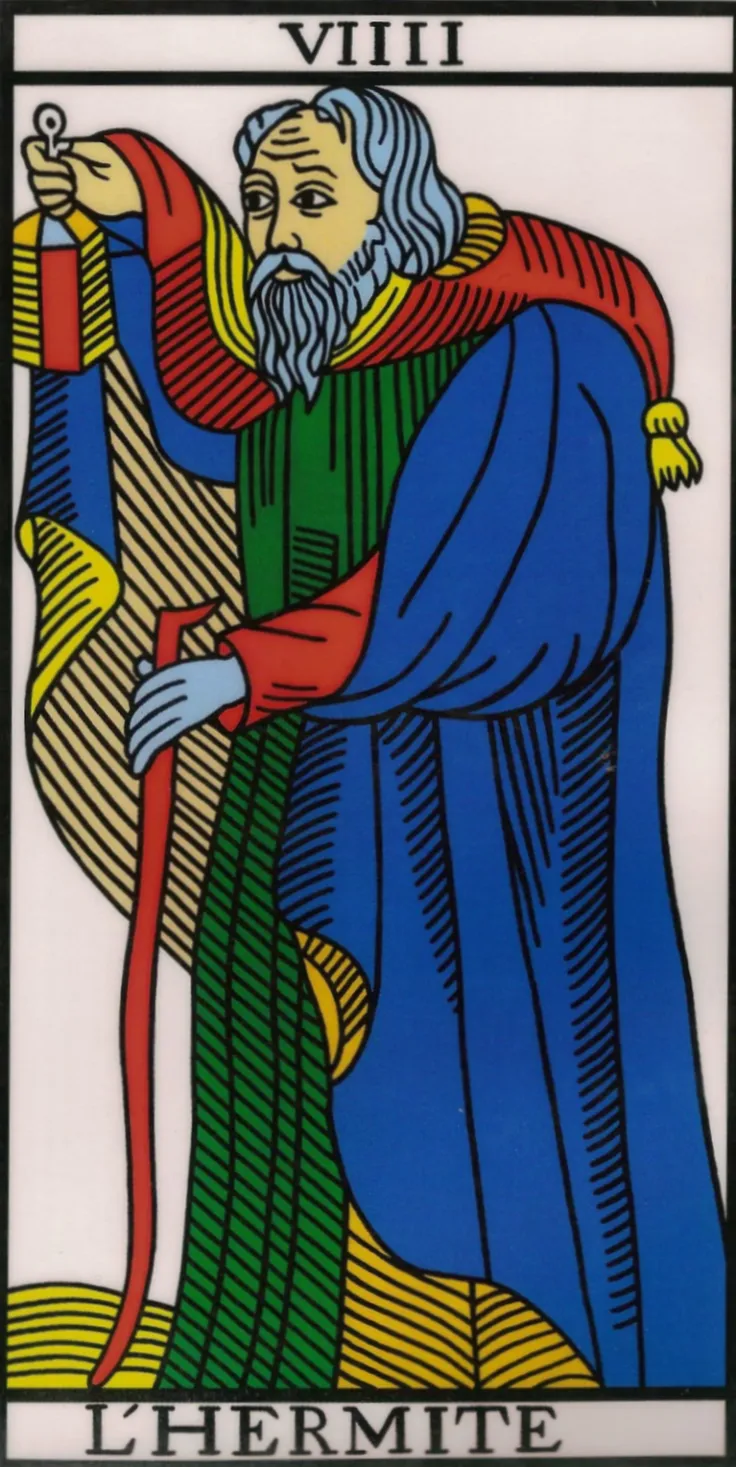
The Hermit tarot card meaning, yes or no
An old man stands alone on a snowed ridge holding a lamp, and inside the lamp is a single star. He is not lighting a path for anyone else. He is looking at what is in front of his own feet.
Everything the Hermit yes or no does comes out of that picture. It is the arcana of withdrawal, self-examination and the kind of knowledge nobody can hand you. So the answer it gives is no, and the reason attached to it is almost always the same: there is something you have not worked out yet, and acting before you work it out is how people end up repeating themselves.
That makes this a frustrating card to pull and a difficult one to dismiss. It does not argue with your plan. It questions whether you currently know what you want from it.
The no that sends you back rather than away
Most refusals in this deck close a door. This one hands you a lamp and points at the floor.
Notice what the Hermit is not saying. It is not saying never, it is not predicting failure, and it is not warning you about anybody else’s behaviour. The obstacle in this card is the distance between what you think you want and what you would want if you sat with it for a fortnight. That gap is the whole message.
Which is why the Hermit is the only no here that can turn into a yes without anything in the outside world changing. Nothing has to go your way. You just have to know your own mind better than you did when you shuffled.
The Hermit yes or no in love
In a relationship question this one lands hard, because the answer is usually no for now and the reason is usually you.
A pause is the whole counsel of the card. Asked about starting something, it says you are still carrying something unexamined into it. Asked about a relationship you are already in, it is pointing at a conversation you have been having with yourself and not with the other person. Readers often take the Hermit as loneliness here, and that is the reversed reading, not this one. Upright it is solitude chosen on purpose, which is a different thing entirely.
The useful move after this draw is not to act on the relationship. It is to work out what you actually need from one, and then ask the cards something sharper.
The Hermit yes or no for work and money
Here the no tends to land on questions about purpose rather than about competence.
People draw this card when they are considering a move they cannot really justify, or staying somewhere they have stopped believing in. The refusal is not about whether you could do the job. It is about whether the thing you are chasing is the thing you want, and the card suspects you have not checked lately.
On money specifically, the Hermit is the card for the realisation that the number was never the point. Put a purely financial decision to it and the answer is no, with a quiet question attached about what the money is for.
The Hermit reversed, and why it stays upright here
Reversed, most readers flip the solitude into something unwanted: isolation rather than retreat, cutting yourself off, or the opposite movement of coming back into the world after too long outside it. It is a genuinely different card in that position.
That version never reaches you here. Reversals are left out of these spreads on purpose, because a card meaning retreat one way up and isolation the other cannot hold a steady verdict, and steadiness is the entire job.
Take the no as an instruction, not a verdict
The Hermit yes or no is the easiest refusal in this deck to act on, because it names the next step for you and the step costs nothing.
Go away and think about it. Not forever, and not as a way of avoiding the decision, but long enough that the question changes shape. Then come back with the version of it you could not have asked today.
The one card spread will take that version whenever you have it. And if you want to see what a positive looks like from here, the full list of twenty two sets out where each card lands.
One card, one verdict, nothing else.