
The Devil Yes or No
The Devil is a no
No, and it is the only refusal in this deck that turns the question back on you. The Devil yes or no declines, and then asks what you were really hoping to be told.
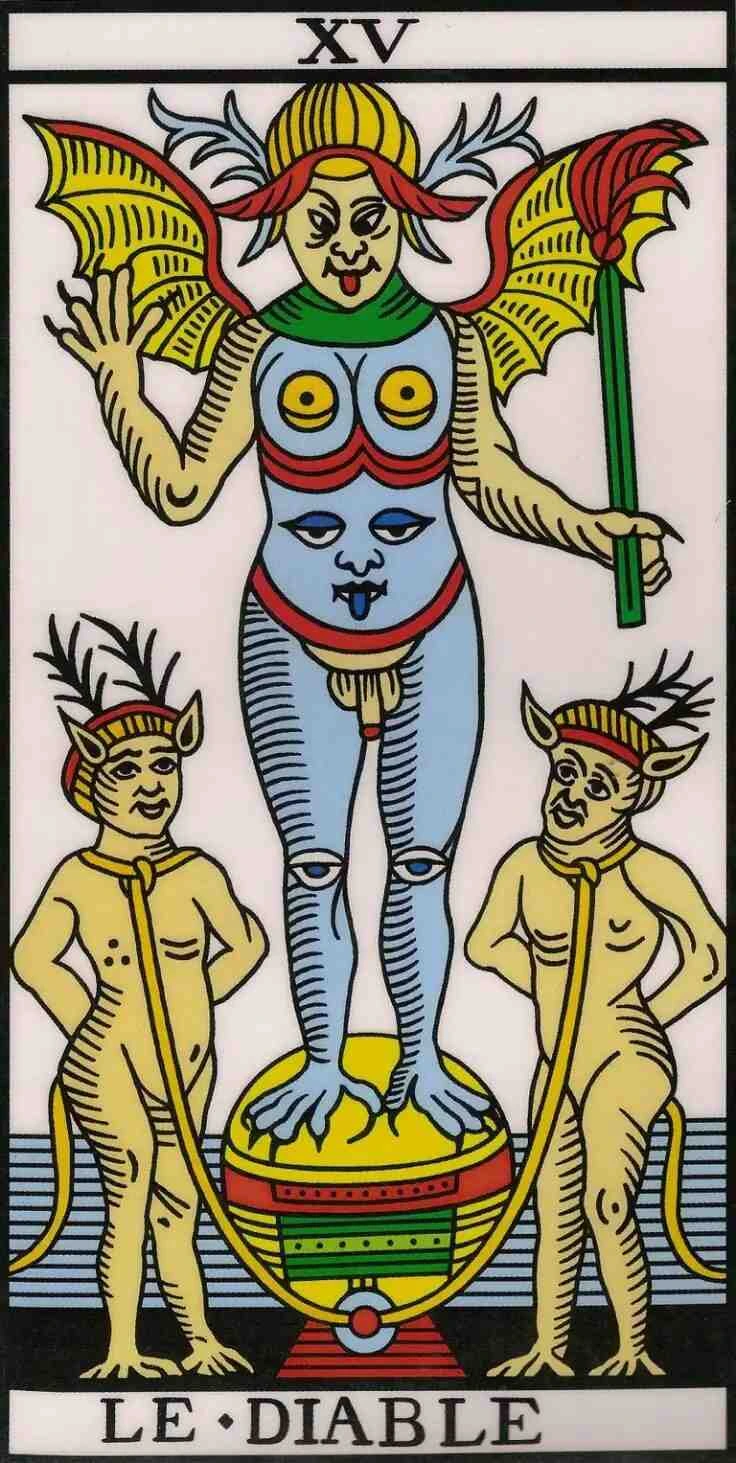
The Devil tarot card meaning, yes or no
A horned figure crouches above two chained human figures. The detail everybody misses is the chains. They are loose. The loops sit wide around the necks and either figure could lift one off without help.
That single piece of staging carries the whole card. It is the arcana of attachment, dependence and the bargain you keep renewing, and the picture is careful to show that the trap is not locked. Nobody is being held. People are staying.
So the refusal is specific. It is not saying the thing you asked about is evil, and it is certainly not predicting disaster. It is saying there is something here you are tied to, the tie is doing the choosing, and a yes given under those conditions would not mean much.
A no aimed at the question rather than the answer
Most cards in this deck respond to what you asked. This one looks past it.
When the Devil comes up, the useful reading is rarely about the plan itself. It is about the pull behind the plan: the habit you are arranging your week around, the person whose approval you are quietly working for, the purchase that is standing in for something else entirely. The card declines the surface question because it does not believe that is the question.
That makes it uncomfortable and unusually useful. Ask what you would do if the attachment were not there, and if the answer changes, the card has told you something no other arcana in the deck will.
The Devil yes or no in love
This is the context people most often bring to this card, and the no needs stating carefully.
A relationship question answered by the Devil is not a verdict that your partner is bad or that the relationship is doomed. What the card points at is dependence: patterns neither of you chose on purpose, jealousy that has become routine, an arrangement that persists because leaving it would be effortful rather than because either of you wants it.
Physical attraction sits in this card too, and it is not a flaw. The caution is only about attraction doing the deciding while the rest of the picture goes unexamined. If you asked whether to go back, the answer is no, and the question underneath is what you expect to be different this time.
The Devil yes or no for work and money
Here the card is remarkably literal, and it is often about money specifically.
Debt, a contract that is harder to leave than to sign, a salary that has quietly become the reason for staying somewhere, a job that pays for a lifestyle that requires the job. The no lands on all of it, and the common thread is an arrangement that has stopped being a choice.
It also covers overwork, which is the version almost nobody recognises in themselves. If you asked whether to take on more, and more is already more than you can carry, the Devil is the card for that exact self-deception.
The Devil reversed, and the reason it is kept out
This is the clearest example on the whole site of why these spreads leave reversals alone.
Upright, the Devil is bondage. Reversed, most readers take it as the chains coming off: breaking free, reclaiming your own decisions, seeing the bargain for what it was. The reading does not soften, it inverts. Upright is a refusal and reversed is close to a yes.
A card that swaps its verdict depending on which way up it lands cannot anchor a yes or no tool. That is not an opinion about reversed readings, which are perfectly legitimate in a full reading. It is the practical reason every card on this site is dealt one way up.
Name the attachment, then ask again
The Devil has refused, and the refusal comes with the most specific homework in the deck.
Work out what the tie is. Not the plan, the tie: the thing you would have to give up for the question to be a free one. You do not have to cut it today, and the card is not demanding that you do.
What it is saying is that until the tie is at least visible, any answer you get is being filtered through it. Once it is, bring the question back to the one card spread, and the deck list will show you what the other twenty one cards have to say.
One card, one verdict, nothing else.