
The Chariot Yes or No
The Chariot is a yes
Yes, provided you stay at the reins. The Chariot yes or no is the most active positive in the deck: it agrees with you and then makes the outcome depend on your attention holding. Let go and the card has nothing left to promise.
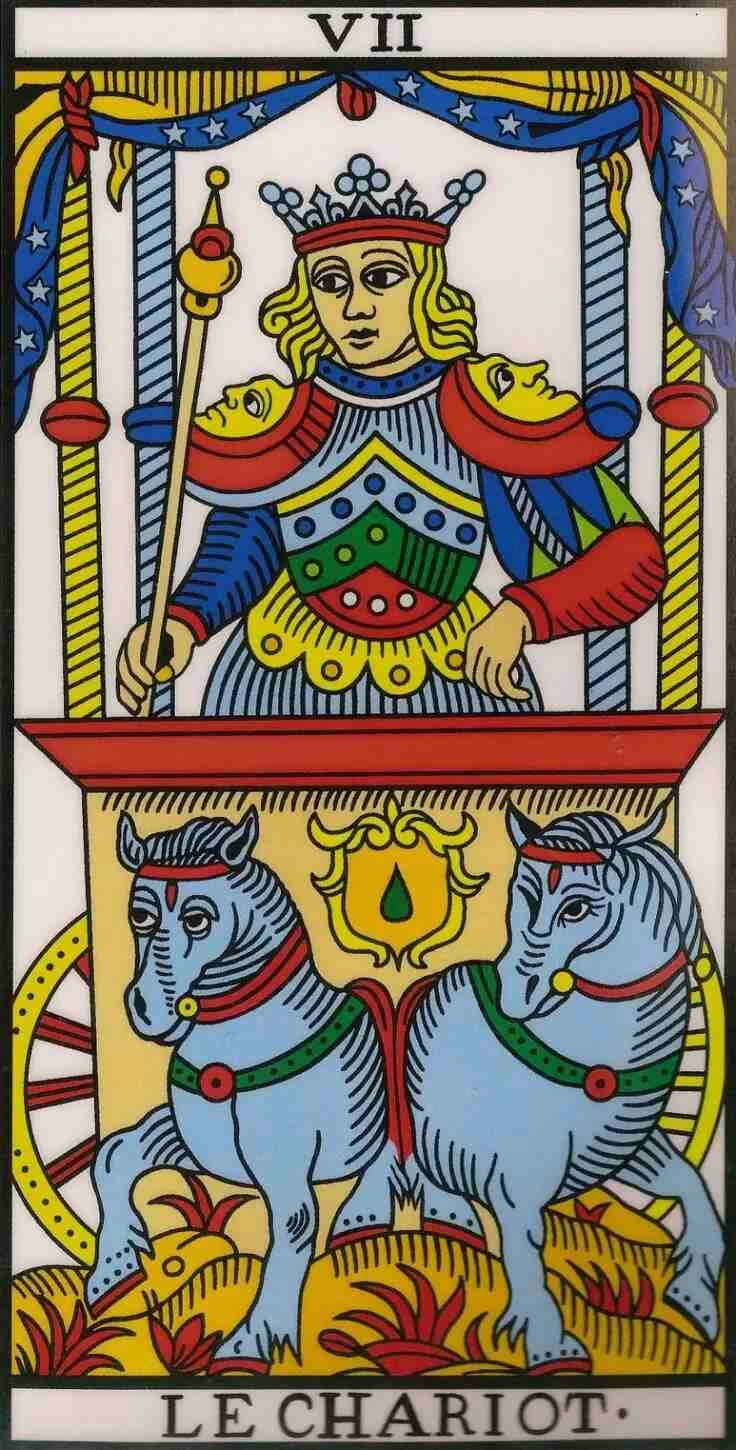
The Chariot tarot card meaning, yes or no
A figure stands in a stone chariot drawn by two sphinxes facing opposite ways, one black and one white, under a canopy of stars. His hands are empty. There are no reins in this picture at all, so whatever is keeping those two animals pointed the same way is coming out of him, and they would part the moment it lapsed.
That detail is the card. This is the arcana of willpower, focus and control held under pressure, and the two sphinxes are the competing impulses that have to be kept pointing the same way. Victory sits in this card, but it is the earned kind, and the earning is visible in the picture rather than merely implied by it.
For a yes or no question that produces a clear positive with an unusual amount of agency attached. The outcome is available. It is not automatic, and nothing in this card suggests it will happen to you while you look elsewhere.
A yes that depends on you not letting go
Compare it with the slow positives in this deck and the difference is obvious. Some cards say yes and ask you to wait. This one says yes and asks you to drive.
What that means in practice is momentum. The Chariot favours decisions you are going to follow through on quickly, with your attention on them, against some resistance. It is at its best when there is an obstacle and you have decided to go through it.
Where it loses interest is the passive version of the same question. Will this sort itself out, will they come round, will the situation improve if I leave it. The Chariot is not the card for any of those, and the yes it gives does not cover them.
The Chariot yes or no in love
Here the positive is real but it comes with a caution that is easy to skip.
If you asked whether to take the initiative, say the thing, make the approach or push past an awkward stretch, the answer is yes and the card is unusually encouraging about it. This arcana rewards the person who moves.
The caution is about force. The same willpower that makes this card a yes becomes pursuit when it is aimed at another person, and a relationship question answered by the Chariot is worth re-reading to check which one you were asking. Steering your own choices, yes. Steering somebody else’s, and the card is describing a chariot with nobody in it.
The Chariot yes or no for work and money
Working questions are where this card is least ambiguous.
Promotions, applications, launches, negotiations, stepping up into something demanding, pushing a stalled project over the line: all of these get a straight yes. The Chariot is a working person’s card and the discipline in it reads as competence rather than strain.
For money it favours the plan you execute: a payoff schedule, a savings target, a stretch you can actually sustain. It is noticeably less helpful on questions about luck, timing or things arriving from outside, because there is nothing passive in this arcana at all.
The Chariot reversed, and what it would have changed
Reversed, the common reading is the same energy misfiring: aggression without direction, control turned into force, or the opposite collapse where there is no drive left and the sense of drifting takes over. Some readers add obsession, the goal pursued so hard that judgement goes.
You will not see that reading here. These spreads deal upright only, as a deliberate rule, so the Chariot yes or no stays positive on every appearance and keeps the same condition attached to it.
Take the yes and keep steering
The Chariot has given you the result and kept one hand on the outcome. What is left to settle is not whether to go, but whether you will stay interested long enough to arrive.
If the answer to that is no, the yes is still accurate and will simply go unclaimed, which is a more common ending than anybody likes to admit.
Put the next question to the single card spread when you have one. The list of every verdict shows where the rest of the deck comes down, and several of those cards will ask you to do nothing whatsoever, which is a stranger instruction to receive than this one.
One card, one verdict, nothing else.